
After the patient was finally restrained and returned to bed, I was escorted out of the room. I was told to hand off my remaining patients so I could be sent to the emergency department for medical evaluation.
While the two nurses who had been with me completed their witness statements, I gave bedside reports to the nurses reassigned to take over my patients.
One of them encouraged me to sit down. I was having trouble speaking clearly and struggling to remember basic details. At the time, I believed it was just shock. I didn’t yet understand that I was disoriented. Thankfully, I had already completed my change-of-shift reports, which helped tremendously as I tried to give report through the fog.
The Decision to Press Charges
Someone finally asked, “Do you want to press charges?”
Still disoriented, fatigued, and nursing a pounding headache, I responded calmly:
“Yes.”
Several nurses nearby reassured me that I was doing the right thing. That mattered to me, and it still does.
The nursing supervisor escorted me to the emergency department. She explained what had happened to the charge nurse and informed them that I was pressing charges against the patient.
I still remember what happened next.
A staff member nearby scoffed:
“What good will that do?”
Another responded:
“Absolutely nothing.”
At the time, I was too hurt and tired to process what those words meant. But later, they would echo.
A Cold, Rushed Response
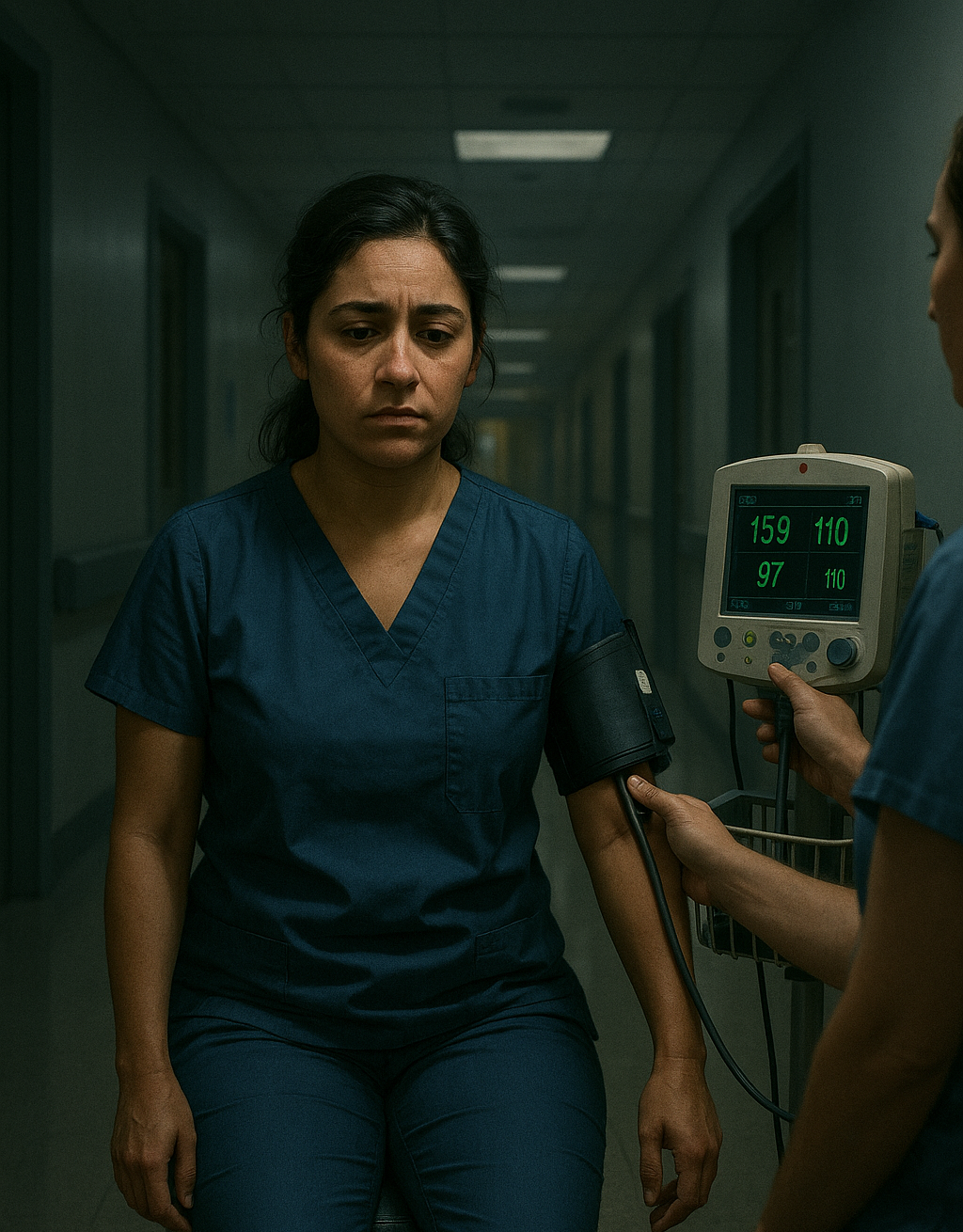
A nurse wheeled over a portable vital signs machine and took my vitals while I stood awkwardly in the hallway. It felt wrong, impersonal and rushed. My blood pressure and heart rate were elevated. No surprise there.
Eventually, I was escorted to a room and handed yet another witness statement form. I had trouble writing. My head was throbbing, especially around my left ear, and my left arm pulsed with pain. Still, I did my best.
A trainee security guard came into the room. At another time, I might have found her enthusiasm charming, eager to learn, full of energy, and smiling brightly. But she seemed too excited about the process of filing charges and meeting with the magistrate, almost as if this were a fascinating case study rather than a violent assault that had just happened to me.
I waited for the doctor, expecting to be monitored for hours.
When she arrived, the exam lasted no more than 15 minutes.
She checked my eyes, asked orientation questions, briefly examined my head, and asked about my pain. Then she offered me Motrin and ice and sent me home.
That was it.
When she said I could leave, I stepped into the hallway. I still remember hearing the nursing supervisor whisper under her breath:
“That’s it?”
To this day, I know that any other patient, especially one who wasn’t a nurse, would have been treated more thoroughly. But I was too tired, overwhelmed, and injured to push back. I just followed the motions.
Legal Steps — and More Disappointment
A police officer arrived, and I recounted the incident again, handing over another completed statement. Then I was brought to another room with a large computer screen. I was informed that I would be speaking with a magistrate.
Both the officer and the magistrate were kind. They listened patiently as I spoke, even though I was exhausted and my headache was worsening.
After reviewing everything, the magistrate confirmed that I had been the victim of an act of violence. He granted an emergency protective order and issued a charge against the respondent with a criminal offense resulting from violence, force, or threat, as defined under VA Code 19.2-152.7:1.
I barely understood what that meant. I was too tired to care. All I knew was that the patient was now “in trouble,” I felt like shit, and I was finally allowed to go home.
One Day Off
I was handed the paperwork for the protective order and a return-to-work note. It read:
“This person cannot work for 1 day. This person may return to work on 10/21/2024.”
I stared at the paper in disbelief.
One day? I thought it was a typo.
I asked the nurse if she could speak with the doctor about extending it. “Surely,” I thought, “getting my head used as a volleyball deserves at least two days of recovery.”
Thankfully, they updated it: two days.
The assault had occurred at approximately 4:11 a.m.
My After Visit Discharge Summary was printed at 5:21 a.m.
Diagnoses:
- Alleged assault
- Head and face pain
- Pain in the joint of the left shoulder
Discharge instructions:
“Take Tylenol or Motrin as needed. Ice affected areas. He [sic] will likely be more sore tomorrow. Follow up in occupational health.”
The Weight of Injustice
As I drove home, I couldn’t help but reflect on the irony: getting assaulted, giving change-of-shift reports, filing the incident report and police report, speaking with the magistrate, and waiting for an ice pack all took longer than the medical evaluation and care I received.
All of it, every step, was wrapped up in less than one hour and twenty minutes.
To say I felt overwhelmed, disoriented, and disappointed would be an understatement.
“Be Kind”
When I arrived home, my phone rang. It was my leadership. They sounded surprised I had already been discharged so quickly. I was told they had come to the ER to check on me, but I was already gone.
They asked what happened and how I was doing. I tried my best to explain, but I was drained, and my headache was still intense.
Then, strangely, the conversation shifted. They mentioned the hospital’s latest newsletter and their request for additional “Be Kind” signs to be displayed throughout the building, highlighting the lack of existing signs.
I ended the conversation feeling hollow.
Be Kind signs?
I had just been assaulted at work, and the talk was about signs?
Abuse like this should not be happening. And no sign, no matter how well-intentioned, will make it stop.
I walked into my house and sat down.
And then, finally –
I cried.

fiction health healthcare life love mental-health nursing writing
Leave a Reply