
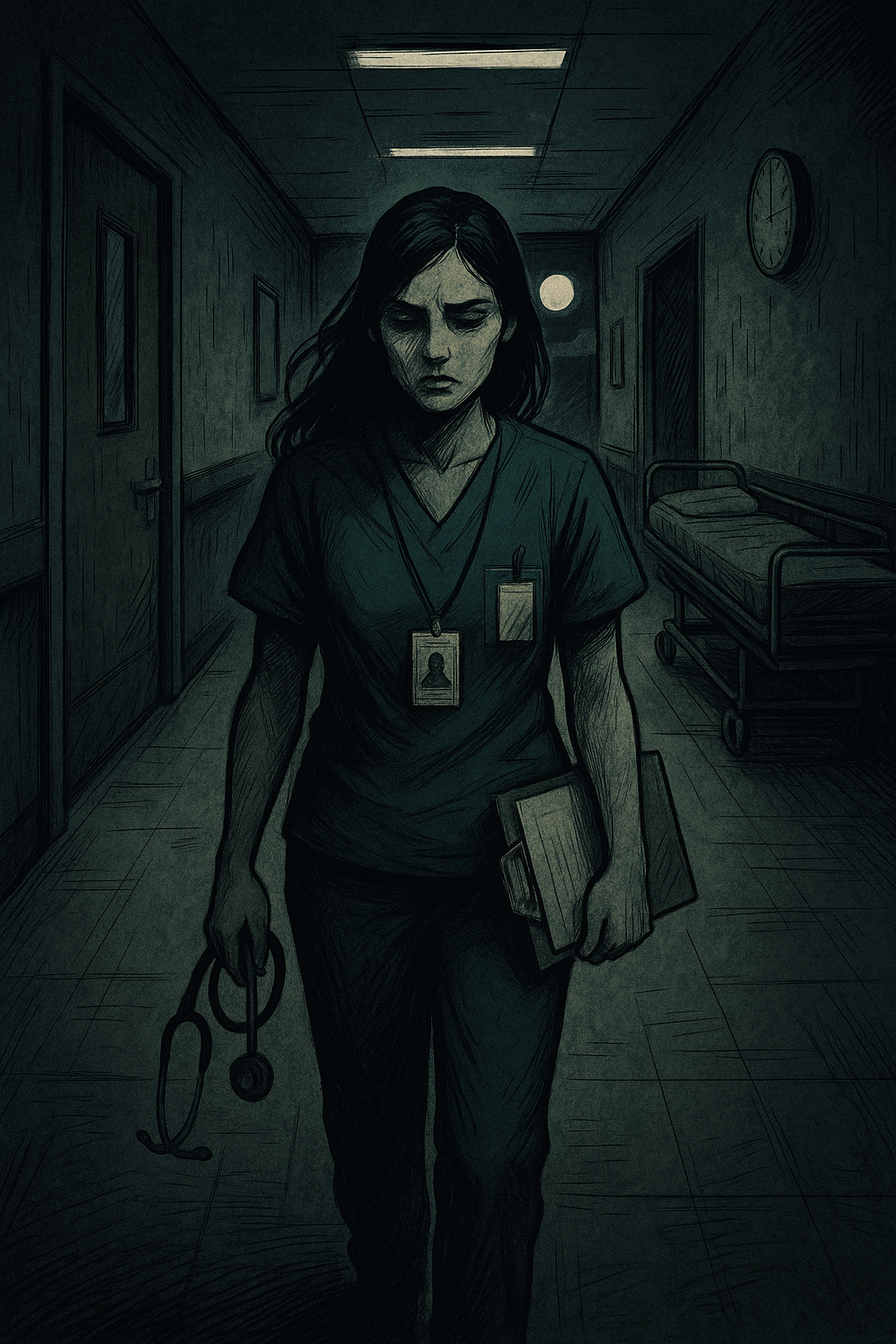
The Night It All Changed
Before the pain.
Before the police report.
Before the loss of my job, my confidence, and my health, before all of that, I was a nurse simply trying to do my job on a unit I was never supposed to be on.
A nurse with no backup.
A nurse with no warning.
A nurse whose instincts were screaming while the system stayed silent.
So, if you’re wondering when it all changed,
It changed the moment I was floated.
The Shift That Shouldn’t Have Been
On October 19, 2024, around 2200, I was told I was being floated to another unit. The receiving unit had become critical and needed additional support by 2300 — 11:00 p.m.
This is the kind of news nurses dread hearing, especially in the middle of a shift.
Floating was unavoidable and quietly resented. But I did it because that’s what dependable nurses do. We adapt. We show up. We fill the holes leadership never bothers to patch.
But each time I floated, I carried more than my stethoscope.
I carried uncertainty.
I carried risk.
I carried the weight of knowing I would be expected to do everything with limited resources and even less support.
What “Floating” Really Means
Floating is a temporary, highly cost-effective solution hospitals use to fill staffing gaps in high-need areas by shuffling existing staff from adequately staffed units to those in crisis.
If you need an example, imagine a ship with holes in its hull, and instead of repairing it, you use rags to plug the leaks. It’s a temporary fix. It might hold for a while. But when there are too many holes and not enough rags, the situation becomes catastrophic.
I had been floated many times before and knew the general process, but that didn’t make receiving the news any easier. Every time, it came with the same knot of stress and uncertainty.
In my home unit, I knew the layout like the back of my hand. I knew where to find supplies and who I could count on when things got unpredictable. Floating meant stepping into the unknown, new layouts, unfamiliar staff, and often an entirely different patient population. Even for experienced nurses, it was frustrating and disorienting.
Floating Mid-Shift
Floating mid-shift adds another layer of challenge. Not only do you have to wrap up care and chart for your original patients, but you also have to immediately pick up a new assignment.
It breaks continuity of care.
It fragments your focus.
It feels like starting over in the middle of a storm.
Saying no was never an option, leadership made that clear:
“Floating is not optional.”
So, I moved quickly. I completed my remaining patient care, wrapped up charting, and gave bedside reports on my original patients. Just after 2300, I clocked out and then immediately clocked back in under float pay.
And then I headed to the new unit.
A Quiet Start
Upon arrival, I received a bedside report on my new patients and began rounds. Most were resting quietly. None showed signs or symptoms of distress.
I organized my care and brief introductions around scheduled tasks, vitals, rounding, and lab draws – to minimize disruptions and help them sleep.
To my relief, my patients were oriented and stable.
I caught up on charting and medications without issue.
There were no emergencies.
So far, everything was running smoothly.

Leave a Reply