


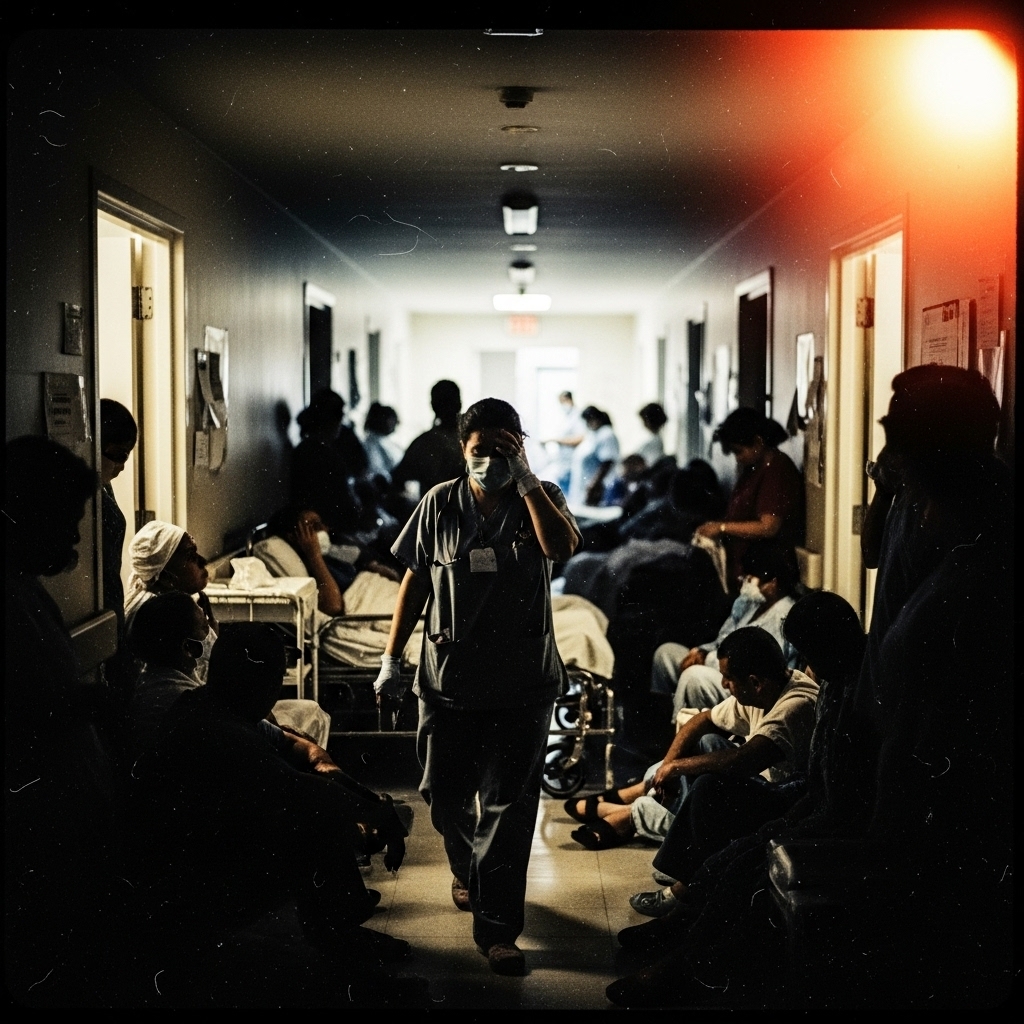
The Hidden Danger of Understaffing in Healthcare
Let’s be clear: understaffing in healthcare isn’t just a frequent inconvenience, it’s dangerous for everyone.
The general public often hears about how it affects patient safety, and yes, patient care absolutely suffers. But they don’t hear enough about what it does to us, the nurses, nursing care partners, respiratory therapists, and other frontline professionals. We are the ones running nonstop, shift after shift, without enough hands, backup, or time.
According to the 2023 report by the American Federation of Teachers (AFT), “Poor Staffing Leads to Injuries and Illness for Healthcare Workers,” the consequences of short staffing go far beyond lack of sleep and stress. They evolve into chronic illnesses, physical injuries, and, ultimately, the reasons why so many walk away from this career altogether (American Federation of Teachers, 2023).
One AFT-reported study showed that nurses working consecutive 12-hour shifts slept less than six hours between shifts. Another found that rotating night-shift workers lost up to four hours of sleep per night (American Federation of Teachers, 2023). That level of exhaustion isn’t just uncomfortable, it is very dangerous. You cannot safely handle life-and-death decisions, titrate drips, or navigate crises while running on fumes.
And yet, we are asked to. Expected to. Blamed when we break under pressure.
Burnout doesn’t just happen, it’s built. It’s baked into the system. When burnout leads to injuries, like back strains from lifting heavy patients alone or anxiety attacks from being pushed beyond our limits, the system acts surprised, as if it didn’t see it coming.
California changed that narrative. After implementing nurse-to-patient ratios, injuries among registered nurses dropped by more than 31%, and among licensed practical nurses, by over 38% (American Federation of Teachers, 2023). This proves when you staff appropriately, people stop getting hurt.
The AFT Nurses and Health Professionals are calling for innovative, systemic solutions that include tracking staffing levels during incidents, using root-cause analyses to identify how policies contribute to harm, and ending the practice of blaming nurses when the system sets them up to fail (American Federation of Teachers, 2023).
Organizations such as NIOSH and OSHA also urge healthcare facilities to report every violent incident, including near misses (American Federation of Teachers, 2023). But most nurses don’t. Why? Because we’re scared, scared of being seen as weak, scared of retaliation, scared we’ll be blamed for getting hurt.
That’s the tragedy. The data is there. The proof is in front of us. Yet, many facilities overlook it, prioritizing profits over people.
The system gaslights us, claiming that the burnout, injuries, and tears in the supply closet are personal problems, not structural ones.
They’re wrong. And deep down, they know it.
We’re not disposable. We’re not the problem.
And the sooner the system realizes that, the better off we will all be.
References
American Federation of Teachers. (2023). Poor Staffing Leads to Injuries and Illness for Healthcare Workers. https://www.aft.org/sites/default/files/media/documents/2023/Poor_Staffing_Leads_to_Injuries_%26_Illness.pdf

Leave a Reply