


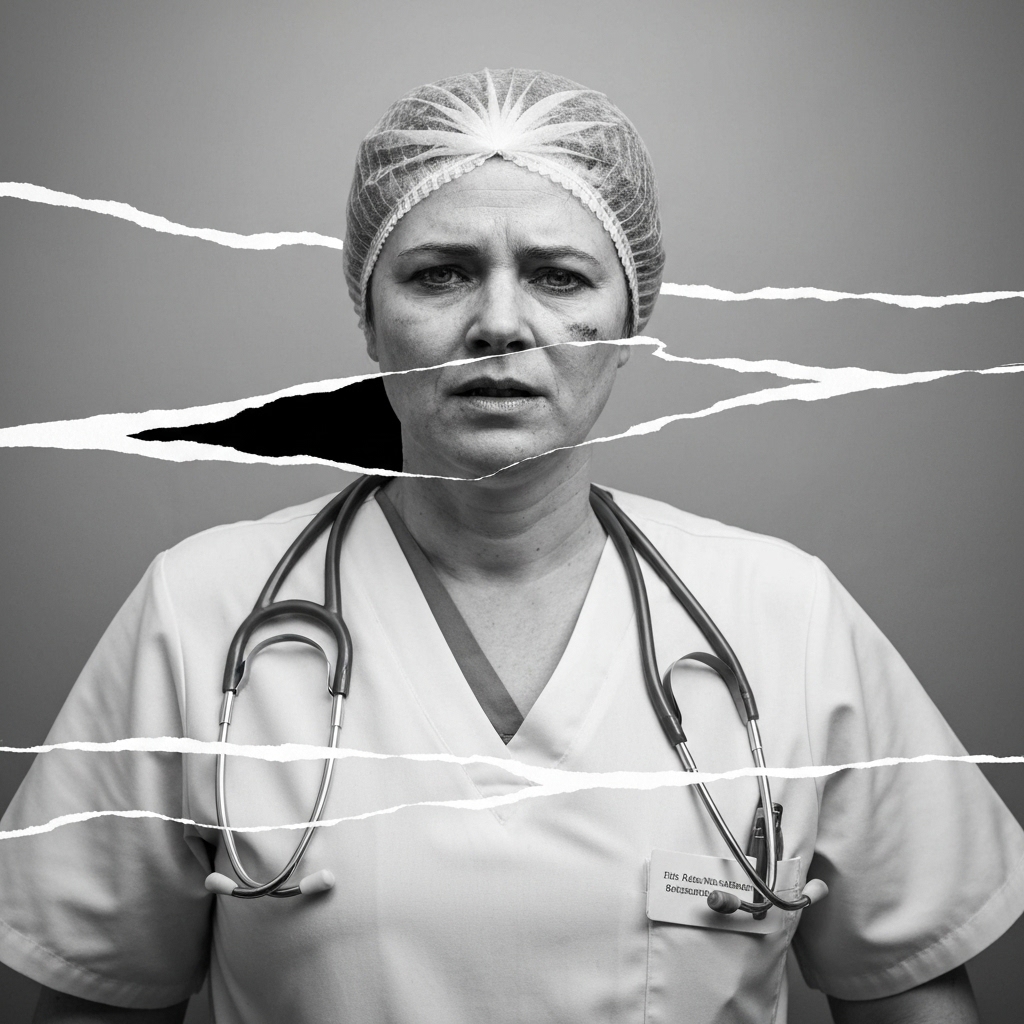
Let’s Talk About What Everyone Tries to Ignore
If a nurse gets punched at work and it’s brushed off as “part of the job,” then maybe we have forgotten what care truly means.
This is an uncomfortable truth we’ve buried for too long.
Violence in healthcare isn’t rare; it’s routine.
It happens in hospitals, clinics, long-term care centers, and emergency rooms every single day.
And the silence surrounding it is deafening.
The Hidden Reality Behind the Smile
We show up to work with compassion and purpose in our hearts, but some nights, we leave with visible and invisible wounds, and so much fear in our chests.
We’re trained to de-escalate, to “stay calm,” to “understand that patients are in crisis.”
And yes, sometimes they are.
But too often, that understanding becomes a weapon used against us.
A way to justify being hit, kicked, screamed at, or threatened.
We tell ourselves it’s okay. We tell each other, “It happens.”
Because in healthcare, violence has become so common that it’s been woven into the job description.
When “Part of the Job” Becomes a Lie
The phrase “It’s part of the job” is one of the most dangerous lies in healthcare.
It minimizes trauma.
It excuses negligence.
It allows abuse to continue.
And it places the burden of safety on the very people being harmed.
Imagine being punched by a patient and told,
“You know how they get.”
Or being cornered by an angry family member and hearing,
“Maybe you should work on your communication skills.”
Now imagine going home, trying to explain it to your family.
Realizing you can’t even find the words.
Because you’re not just tired.
You’re violated and silenced.
The Many Faces of Violence
Violence in healthcare isn’t just physical.
It’s verbal, emotional, and psychological, and it comes from more directions than anyone wants to admit.
It’s the patient who swings a fist.
The family member who spits insults.
The coworker who bullies or gaslights you for speaking up.
The administrator who says, “Just try to avoid that room next time.”
Every one of these moments chips away at our sense of safety and worth.
It tells us that our pain doesn’t matter,
that healing others means accepting harm ourselves.
The System’s Silent Complicity
What makes it worse is how institutions respond.
Reports are downplayed, investigations delayed, and workers are told to “move on.”
Security is underfunded or understaffed.
There are no real consequences for the aggressors,
only quiet warnings and thicker walls around our emotions.
It’s a system built on damage control, not protection.
A system that would rather manage optics than address truth.
Because acknowledging the problem means admitting failure,
and for too many healthcare leaders, that’s more uncomfortable than the violence itself.
Why We Stay Anyway
Despite all this, we keep showing up.
We still care.
Because we remember the patients, the moments when we do make a difference.
Our compassion shouldn’t come at the cost of our safety.
Caring for others should never result in becoming collateral damage in a system that refuses to protect its own.
It’s Time to Call It What It Is
Violence in healthcare is not part of the job; it’s a symptom of a broken one.
And until we name it, report it, and demand accountability,
nothing will change.
We need:
- Real security and prevention policies, not after-action apologies.
- Stronger reporting systems that protect, not punish, staff.
- Zero tolerance for abuse – from patients, families, or coworkers.
- Support for those recovering from workplace trauma.
Because safety isn’t optional.
It’s the foundation of healing – for patients and providers.
The Bottom Line
No one should have to choose between compassion and safety.
No nurse, tech, therapist, or aide should go to work wondering if they’ll be assaulted today.
We care for others –
but it’s time someone cared for us.
If a nurse gets punched at work and it’s called “part of the job,”
then it’s not just a nurse who’s hurting –
it’s an entire system that’s lost its humanity.

fiction health healthcare life love mental-health nursing writing
Leave a Reply